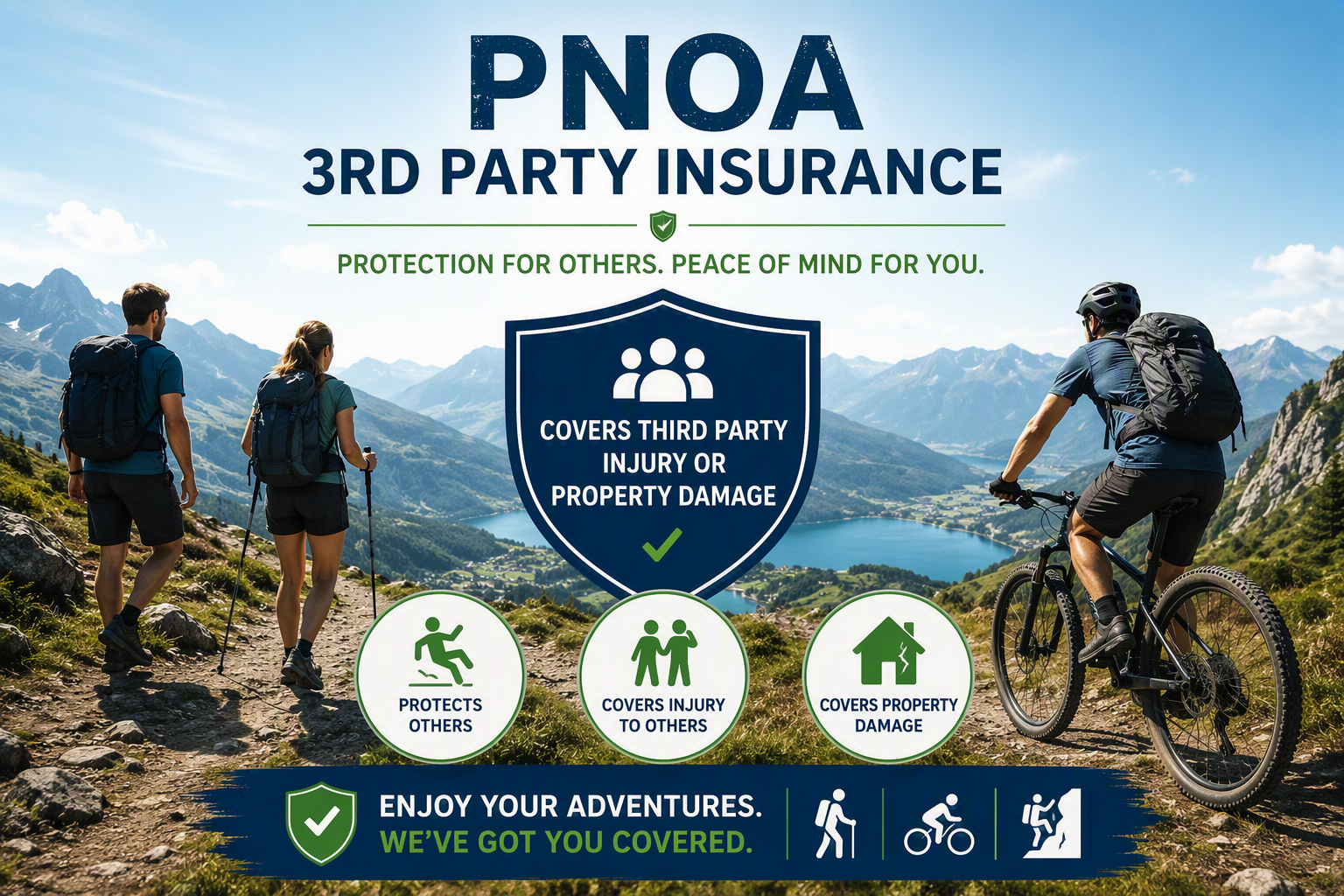
PNOA Third Party Insurance Q&As
These Q&As provide a comprehensive overview of insurance coverage, risk management guidelines, and administrative procedures for the Pacific Northwest Outdoor Association (PNOA) and its members.
1. General Coverage & Policy Definitions
- What is covered by the insurance for PNOA members?
The policy primarily provides third-party liability coverage against problems arising from group events. A list of specific exclusions applies, most notably regarding alcohol use. - What is Directors’ and Officers’ Liability (D&O) insurance?
D&O policies are designed to provide protection for officers and directors (and other designated parties, including the corporation itself) against liabilities arising from wrongful acts committed while performing their corporate duties. - What is Commercial General Liability (CGL) insurance?
CGL insurance policies protect against claims arising from the insured’s liability for negligent acts and/or omissions causing injury or damage through property ownership, operations, product sales or distribution, and professional services. Coverage includes defense costs and claims settlements, subject to exclusions for uninsurable acts (such as intentional acts) or risks covered by other policies like auto or D&O liability.
2. Activity Guidelines
- Road Biking: Fully covered under the policy, except for electric bikes, which are explicitly excluded.
- Hiking in the United States: Covered, though subject to a $10,000 deductible per insurance claim.
- Technical Terrain & Bouldering: Scrambling levels 1, 2, and 3 as well as bouldering are fully covered under our mountaineering package. There are no specific terrain difficulty exclusions.
- Borrowed Equipment (Kayaks): Equipment ownership and loss/damage to the kayak itself are not covered. However, liability arising from trips is covered provided that proper training and safety courses are in place for participants and leaders.
- General Activities Covered: Hiking, backpacking, trail running, climbing, mountaineering, canoeing, kayaking, snowshoeing, backcountry skiing, snowboarding, ski touring, cross-country skiing, mountain biking, horseback riding, trail building and maintenance, operating backcountry huts, instructional programs, publishing guidebooks, and club socials and meetings.
3. Membership & Invoicing
- Insurance Costs: Insurance coverage costs $12.00 per member, in addition to the FMCBC membership fee of $8 per member (rates as of 2021, subject to annual adjustments).
- Billing Timeline: Invoices are issued by the FMCBC in early June, and payment is due on July 31st. It is the responsibility of each Club Representative to ensure the treasurer receives and pays the invoice on time.
- Member Counts & Adjustments:
- Dues are calculated based on your club’s final membership count at the end of your club’s fiscal year.
- If membership numbers drop significantly resulting in an overpayment in June, a credit is applied to the club’s first invoice for the following year.
- Member counts are reviewed in September; if numbers differ by 10% or more, an adjusted invoice will be sent.
- Mid-Year Joins: Members who join partway through the year are automatically covered under the policy regardless of their join date.
4. Participant Eligibility & Waivers
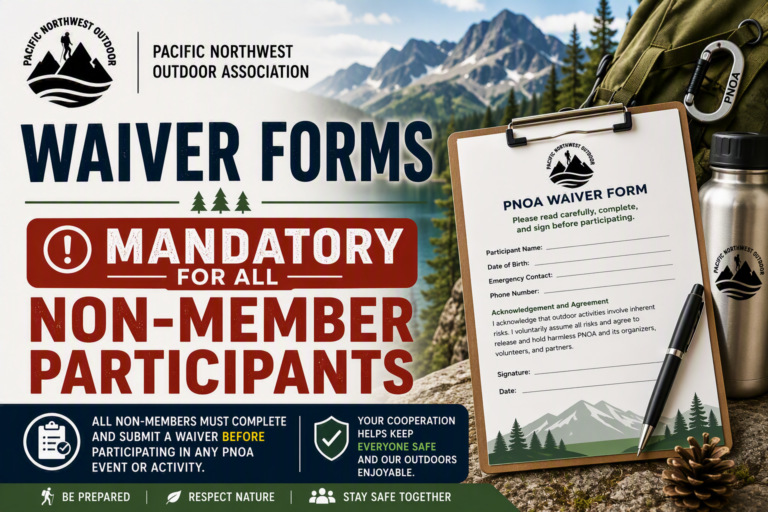
- Guests: Guests may participate in a limited number of club trips (recommended up to 3) without paying full membership and insurance fees, provided they sign a waiver. The club and its leaders retain liability protection during these trips.
- Volunteers and Trip Leaders: Fully protected under the policy. However, clubs must notify the FMCBC when onboarding a large number of volunteers for specific events, as additional coverage may be required.
- Waiver Protocols:
- Universal waivers should ideally be signed annually during membership renewals to ensure active records and good risk management.
- Waivers must be posted online for review in advance; surprising participants with a waiver at the trailhead weakens its legal standing.
- Minors & Acknowledgment of Risk (AR) Forms:
- Minors (under 19) cannot legally sign waivers, and parents cannot sign away a minor’s future claims.
- Minors and parents must instead sign an Acknowledgment of Risk (AR) form, which informs them of inherent risks and grants permission for emergency first aid/evacuation.
- AR forms must be executed on paper only (never online) to avoid accidental confusion with adult liability waivers.
- Trip leaders must be notified when a minor is attending and hold the right to refuse participation if the risk is deemed too high.
5. Incident Reporting
- When to Report: Submit an Incident Reporting form for any significant incident, injury, or event occurring on a club-sanctioned trip that could lead to an insurance claim. This includes any situation requiring significant first aid or a visit to a doctor or hospital. When in doubt, submit the form and contact the FMCBC.
- How to Report: Fill out the form promptly and email it to fmcbc@mountainclubs.org. Ensure your club maintains organized records of all trips and signed waivers to support the process.
6. Administrative Contacts
- Website: PNOA.CA
- General Email: info@pnoa.ca
- Phone: 778-835-3312
- Certificate of Insurance Requests: Contact the Administration and Communications Manager at admin.manager@mountainclubs.org (include the name and address of the facility/organization requiring the certificate).